Need Help? Contact us ...

The “Tier 4” Mystery: What’s Hiding at the Very Bottom of Your Supply Chain?
The “Tier 4” Mystery: What’s Hiding at the Very Bottom of Your Supply Chain?
When you buy a new pair of sneakers or a fancy chocolate bar, you might see a "Fair Trade" sticker or a "Made in Vietnam" label. You might even think, “Cool, the brand knows exactly where this came from.”
But here’s the uncomfortable truth: Most brands don't actually know their whole family tree.
What Exactly is "Tier 4"?
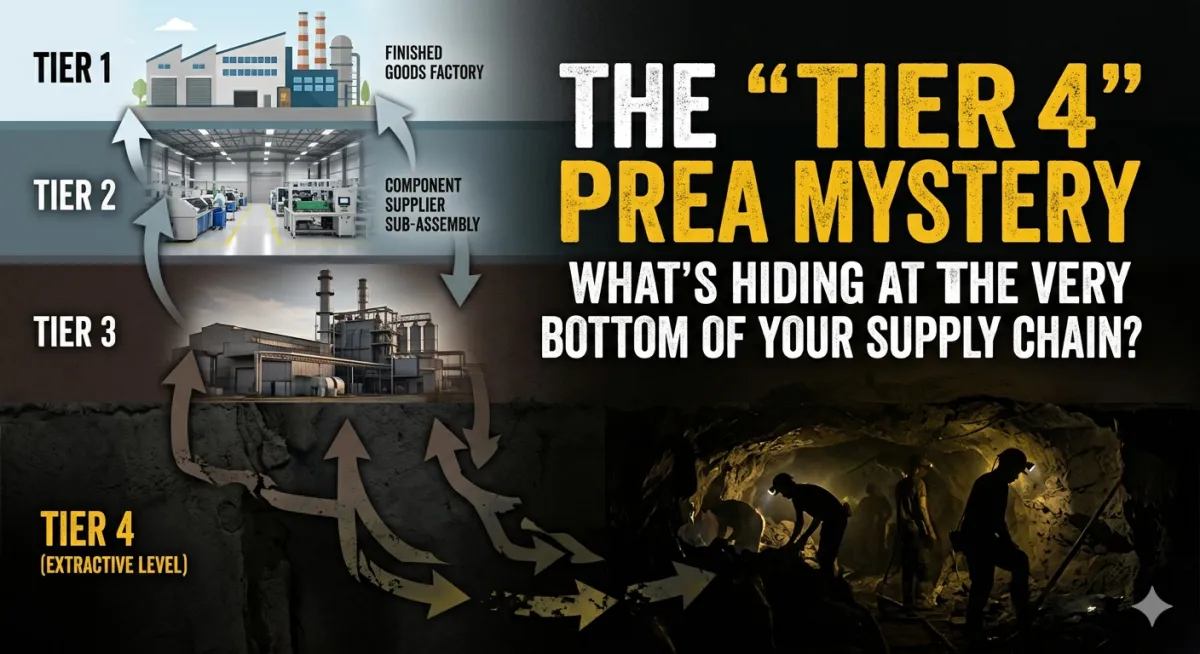
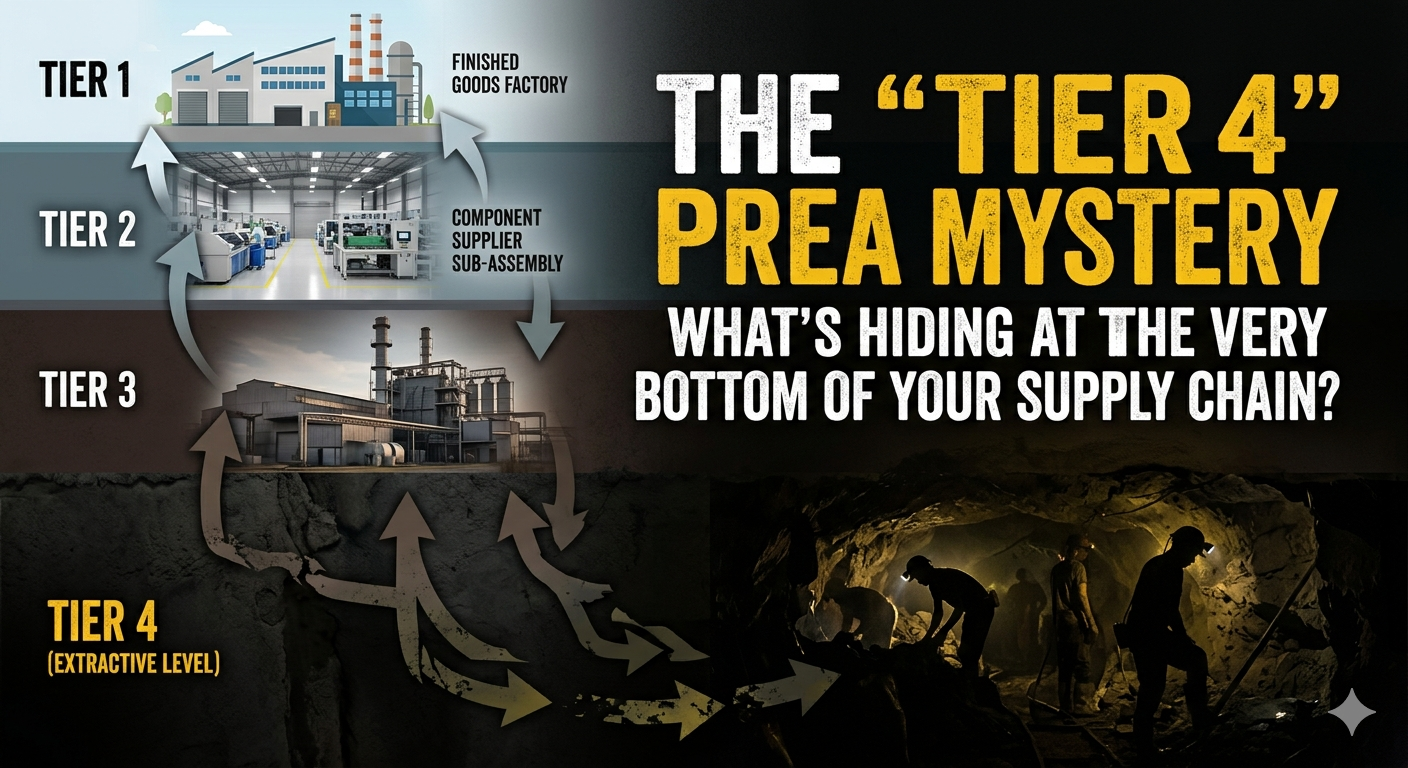
To understand the mystery, we have to look at the layers of a supply chain. Think of it like a pyramid:
• Tier 1: The finished goods factory. This is the place that puts the final logo on the box. The brand knows these people well.
• Tier 2: The component suppliers. They provide the soles for the shoes or the zippers for the jacket.
• Tier 3: The processors. They turn raw materials into usable parts—like turning bauxite into aluminum or raw cotton into yarn.
• Tier 4 (The Danger Zone): This is the extraction level. It’s the small-scale mine in the DRC, the remote cocoa farm in West Africa, or the unregulated fishing boat in the South China Sea.
Why Traffickers Love Tier 4
Human trafficking thrives in the dark. As you move from Tier 1 down to Tier 4, visibility drops off a cliff. By the time a brand gets to Tier 4, they are often dealing with "indirect suppliers"—people they don't have contracts with and didn't even know were part of their story.
In these remote areas, there are:
1. No Paper Trails: Transactions are often cash-based and undocumented.
2. No Inspections: Formal auditors rarely trek into deep jungles or out to sea.
3. Extreme Poverty: Traffickers exploit desperate people looking for any way to support their families, trapping them in "debt bondage" before the raw materials even reach a factory.
The "Ostrich Effect"
For a long time, corporations played the "Ostrich Effect"—burying their heads in the sand and claiming that since they didn't directly hire the person at the mine, it wasn't their problem.
But the world is changing. New laws and savvy consumers are demanding that "I didn't know" is no longer an acceptable excuse. If your product contains a mineral or a fiber, you are responsible for the hands that pulled it from the earth.
The Bottom Line
Cleaning up a supply chain isn't just about the factory with the shiny windows. It’s about the muddy fields and the deep mines. Until we solve the Tier 4 Mystery, we haven't truly solved human trafficking.
Download our guide, because what you can’t see in your supply chain can still harm your brand.


FOLLOW US


COMPANY
LEGAL
Copyright 2026. Rahab's Daughters. All Rights Reserved.