Need Help? Contact us ...





The Invisible Chains
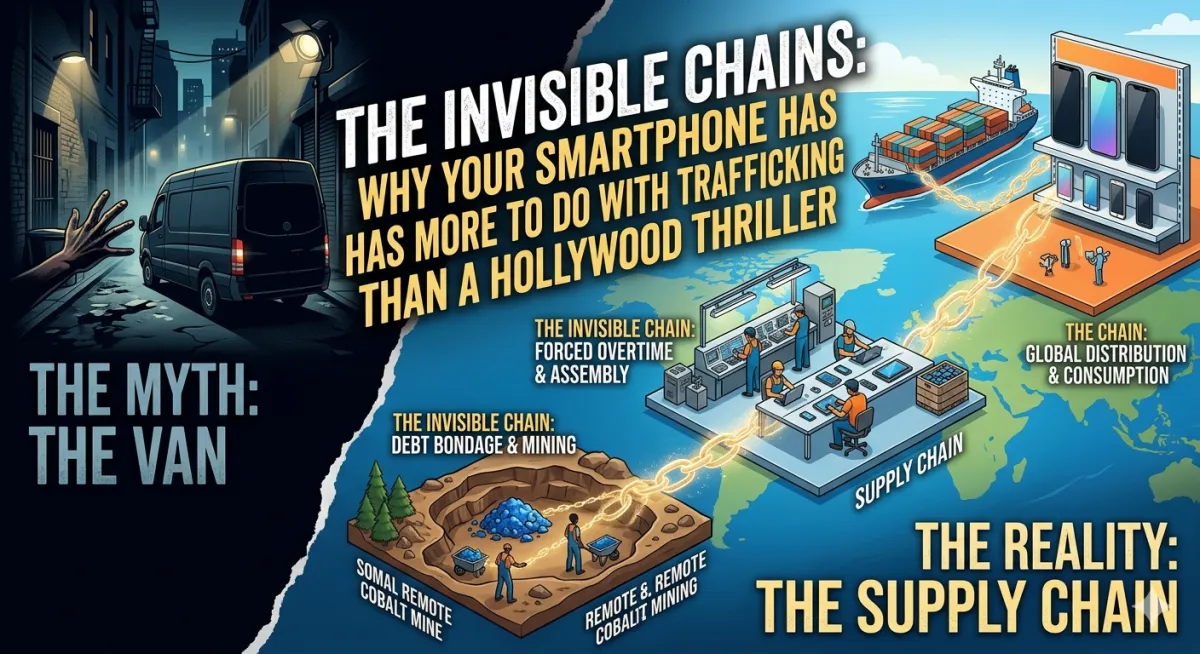
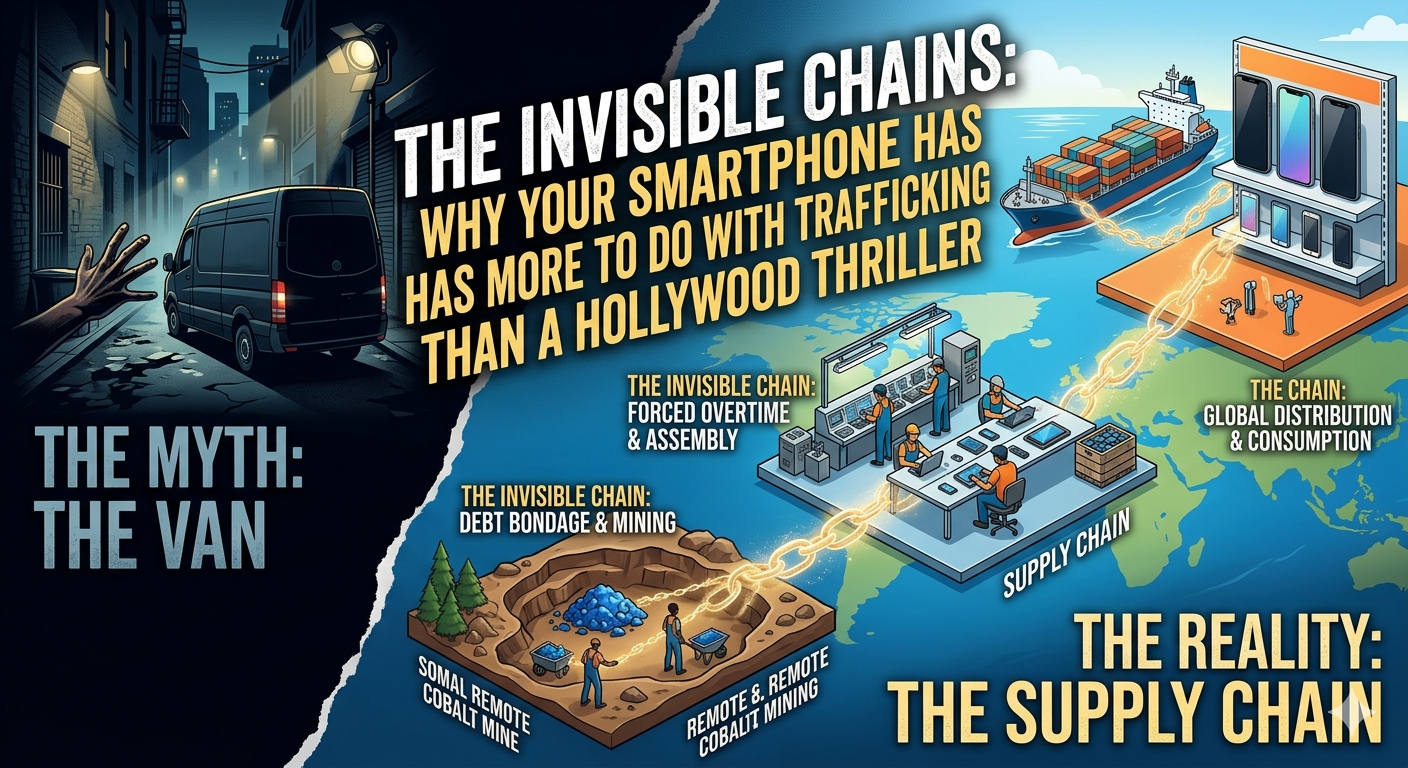
The Invisible Chains: Why Your Smartphone Has More to Do with Trafficking Than a Hollywood Thriller
If you ask the average person to describe human trafficking, they’ll likely describe a scene from an action movie: a kidnapping in a dark alley, a white van, and a high-speed chase.
But if you ask a supply chain investigator, they’ll tell you a much quieter, much more common story. It’s a story that doesn't start with a kidnapping, but with a job advertisement. It doesn't end in a basement, but in an electronics factory, a palm oil plantation, or a fishing trawler. To understand the difference between the "myth" and the "market," we have to look at two real-world stories of forced labor.
The "Golden Opportunity" That Wasn't: Meet "Arav"
Arav (not his real name) lived in a small village in Nepal. He wanted to provide a better life for his two daughters, so when a recruiter promised him a high-paying construction job in the Gulf, he jumped at the chance.
•The Hook:The recruiter charged Arav a $2,000 "processing fee." To pay it, Arav mortgaged his family’s tiny plot of land. He was told he’d make that money back in three months.
•The Trap:When Arav arrived, his passport was taken "for safekeeping" by the foreman. He was moved into a crowded shipping container with 12 other men. The "high-paying" job was actually grueling 14-hour shifts in extreme heat.
•The Invisible Chain:When Arav tried to quit, he was told he couldn't leave until his "debt" was paid. But with "deductions" for food, bed space, and "administrative costs," his debt actually grew every month.
Arav wasn't kidnapped. He walked onto that plane willingly. But the moment his passport was taken and his debt was manipulated, he became a victim of labor trafficking.
The "Sea of No Return": Meet "Lang"
In Southeast Asia, the fishing industry hides some of the most brutal labor trafficking on the planet. Lang was a migrant looking for work at a port when he was offered a job on a fishing boat.
•The Trap:Once the boat reached international waters, the reality set in. Lang wasn't allowed to sleep more than four hours a night. He was fed scraps and beaten if he slowed down.
•The Invisible Chain:The boat stayed at sea for two years. It was serviced by "motherships" that brought fuel and took away the catch, meaning Lang’s boat never had to dock.
•The Supply Chain Connection:The fish Lang caught—often "trash fish"—was ground into fishmeal. That fishmeal was sold to industrial shrimp farms. Those shrimp eventually ended up in the frozen food section of a major Western supermarket.
Lang’s story is the perfect example of how labor trafficking is built into the products we buy. The consumer sees a "cheap" bag of frozen shrimp; Lang sees two years of his life stolen at sea.
Why the Distinction Matters
When we focus only on sex trafficking, we look for "bad guys" in the shadows. When we focus on labor trafficking, we have to look at ourselves. Labor trafficking is an economic crime. It is fueled by our demand for:
Lower Prices:We want the $5 T-shirt and the $2 chocolate bar.
Faster Shipping:We want it tomorrow, putting impossible pressure on factories.
Convenience:We don't want to ask where the cobalt in our phone came from.
The Bottom Line
Human trafficking in the 21st century isn't always about someone being taken; it's about someone being trapped. It’s about the manipulation of poverty, the theft of documents, and the weight of impossible debt.
Until we address the "Invisible Chains" in our global supply chains, we are inadvertently funding the very crimes we claim to hate.
👉Download our guide, because the products you trust may be hiding stories you’ve never seen.


FOLLOW US


COMPANY
LEGAL
Copyright 2026. Rahab's Daughters. All Rights Reserved.